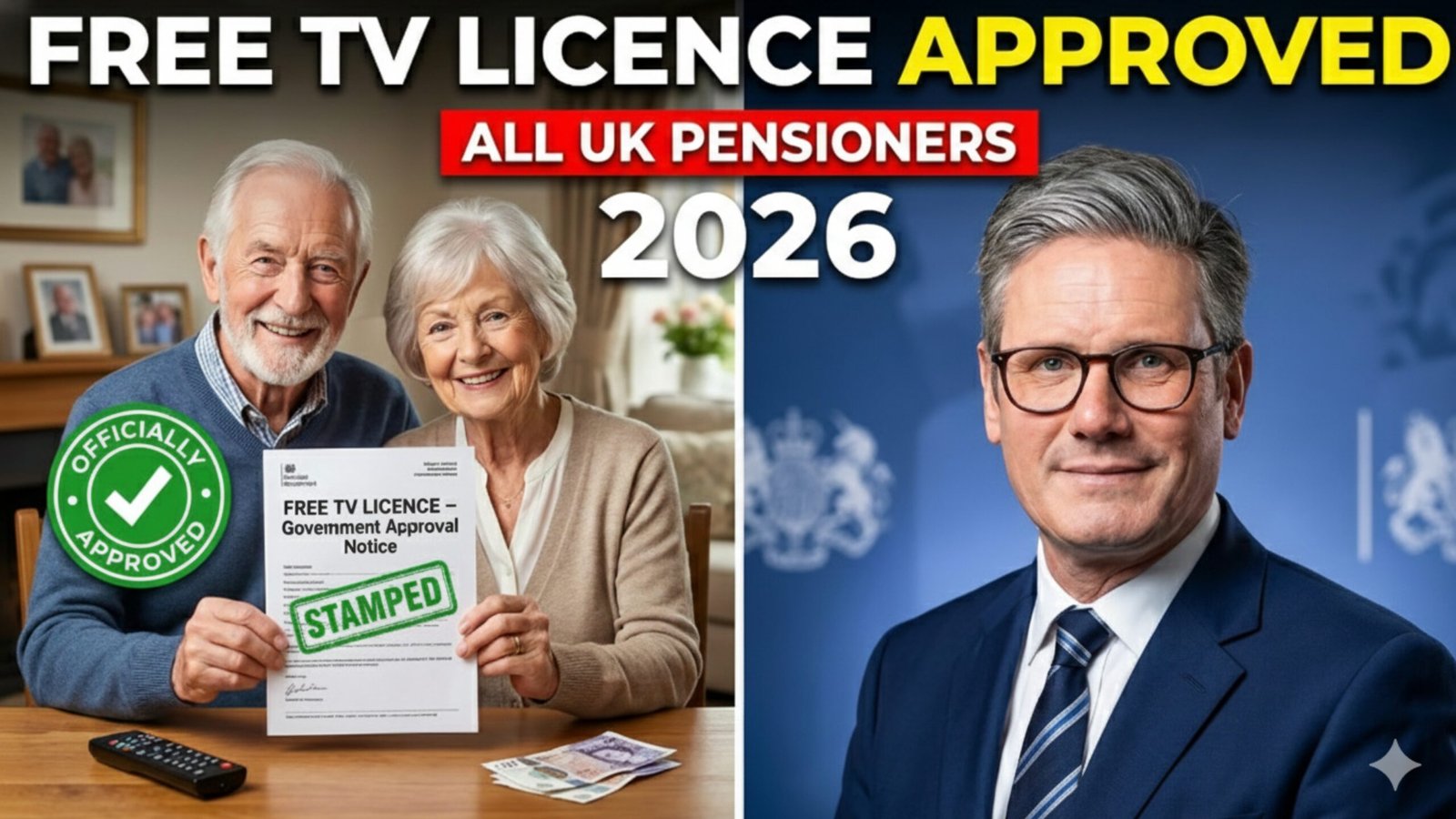
The UK government has taken a momentous step that will impact millions of older adults across the country. After years of campaigning, negotiations, and public pressure, a free TV licence for all UK pensioners has now been officially approved. This long-awaited change brings relief to seniors who have struggled with the cost of television licences, especially in light of rising living expenses and inflation. For many pensioners, this announcement isn’t just about saving money — it’s about fairness, inclusion, and honouring the value of watching beloved TV shows without financial stress. In this article, we explore what this policy means, how it will work, who benefits, and why it matters so much.
What Has the Government Announced?
The UK government has confirmed that all pensioners aged 66 and over will receive a fully free TV licence starting this year. Previously, only pensioners over 75 were eligible for a free licence, and that support was subject to funding agreements and income rules. But now, the eligibility age has been lowered, and financial tests are no longer required. This means anyone living in the UK who is of state pension age will get their licence covered by the state.
The government says this move is part of its commitment to supporting older people and reducing the financial burden many face on fixed incomes. It also aligns with a broader strategy to enhance digital inclusion and ensure that older adults are not left behind in access to information, news, entertainment, and cultural programming.
Why This Matters for Pensioners
Television is more than entertainment. For many pensioners, TV is a vital connection to the world, especially for those who live alone, have limited mobility, or can’t easily socialise outside their homes. News programmes, talk shows, documentaries, and drama series all help people stay informed, engaged, and mentally stimulated.
Prior to this change, the cost of a TV licence — which currently stands at over £150 per year — could be a significant expense for someone on a limited pension. With energy bills, rent or mortgage costs, food, transport, and healthcare expenses steadily rising, cutting that cost makes a real difference. A free licence can free up money for other essentials and reduce the sense of financial pressure that many older adults face.
How the New Scheme Will Work
The government has outlined a clear process for implementing the free TV licence for pensioners:
• Automatic Eligibility: Pensioners aged 66 and above will automatically qualify. There’s no need to apply or fill in lengthy forms.
• Verification Through Government Records: Eligibility is confirmed using existing government records such as National Insurance and pension data.
• Renewal and Duration: Once approved, the free licence will be valid for a year and will automatically renew as long as the person remains eligible.
• No Means Test: Income or savings will not affect eligibility — making the process simple and inclusive.
• Support for Digital Alternatives: For pensioners who watch TV primarily online or through digital services, information and support will be provided about how the free licence works with online viewing.
The government has pledged a smooth rollout period, aiming to have the system fully operational within months.
Reaction from Pensioner Groups
Charities and advocacy groups representing older adults have welcomed the announcement. Many had campaigned tirelessly for this change, arguing that television is a lifeline for people who are otherwise isolated or cut off from community life.
Age UK, one of the largest charities serving older people, called the decision “a long-overdue and heartening recognition of the needs of pensioners.” They highlighted how the free licence can help reduce loneliness, improve mental health, and enhance wellbeing.
Other groups pointed out that the policy not only supports older people financially but also respects their dignity and right to access cultural and public service broadcasting without barriers.
Government’s Rationale Behind the Move
The government has defended the policy on several grounds. First, it recognises that older citizens make significant contributions to society, whether through volunteering, family support, or simply as valued community members. Providing a free TV licence is seen as a way to honour these contributions.
Second, officials emphasise the social benefits. Television viewing, particularly of public service channels like the BBC, ensures that pensioners remain well-informed about national news, health advisories, community events, and emergency broadcasts.
Third, connecting older people with current affairs and entertainment helps combat loneliness — a growing public health concern in the UK. With many pensioners living alone, TV can be a daily companion that supports emotional wellbeing.
Finally, the government frames this step as part of a broader commitment to social inclusion. In an age where digital services are increasingly dominant, ensuring that everyone can access televised content is crucial.
What Pensioners Need to Know
If you are a pensioner in the UK and you watch television, here’s what you need to know about the new free licence scheme:
• Check Your Eligibility: If you’re 66 or older and living in the UK, you qualify automatically.
• No Application Required: You don’t need to apply — the government will notify you if you qualify.
• Keep Your Contact Details Updated: Make sure your address and communication preferences are up to date with government services so that notifications reach you.
• Online Support Available: For those who watch TV online or through streaming, guidance is available to clarify how to make the most of the free licence.
• Ask for Help if Needed: If anything is unclear, organisations like Citizens Advice or Age UK can provide support.
Impact on Younger Viewers
While the policy directly benefits pensioners, there are questions about how it affects other groups. Younger viewers, households without pensioners, and those on low incomes may still need to pay for their TV licence if they watch live TV or BBC iPlayer.
Some critics argue that the government could go further by offering discounted licences to other vulnerable groups, such as low-income families or people with disabilities. However, for now, the focus remains on pensioners.
The government has stated that this policy does not change the requirement for anyone else to have a licence if they watch live TV or use BBC iPlayer. It also emphasises that the move is funded through general taxation, not by increasing licence fees for other viewers.
Financial Implications for the Government
Offering free TV licences to all pensioners comes with a significant price tag. Millions of adults fall into the state pension age bracket, and subsidising their licences requires substantial public spending. However, economists suggest this may be a worthwhile investment in social welfare.
The plan is seen not only as an expense but also as a preventive measure: by improving access to television, especially news and health information, the policy could lead to better informed and healthier older adults. This, in turn, might reduce demand on public health services and social care in the long run.
The government insists that funding for the scheme has been carefully considered and balanced against other priorities.
Voices from the Community
Across the UK, pensioners have reacted with enthusiasm. Many say that the cost of the TV licence has been a pain point for years. For some, television is more than entertainment — it’s a way to remember favourite shows, follow football matches, enjoy documentaries, and feel connected to home and community.
One pensioner from Manchester said that knowing the cost of the licence would be covered “takes a weight off my shoulders.” Another from Glasgow shared how TV helps them stay in touch with world news and feel less isolated during long winter evenings.
Families of older adults also expressed relief, noting that the free licence could mean small but meaningful savings — money that might go toward food, travel to visit loved ones, or health-related expenses.
What Comes Next?
Implementation of this policy will require coordination between government departments, broadcasting authorities, and support organisations. Pensioners should watch for official correspondence explaining when and how their free licence status is activated.
There may also be public information campaigns to ensure that everyone eligible is aware of the change and understands how to benefit from it.
Looking ahead, this policy could set the foundation for further reforms in media access and social support for older people in the UK. As technology evolves, discussions about digital literacy, broadband access, and accessibility will likely continue.
Conclusion:
The approval of free TV licences for all UK pensioners marks a positive turning point in social policy. It recognises the importance of affordable access to television, honours the needs and contributions of older citizens, and helps ease financial pressures at a time when many feel stretched by the rising cost of living.
For pensioners themselves, it’s not just about saving money — it’s about enjoying life, staying informed, and feeling connected to the world. This policy may seem simple, but its impact has deep emotional, cultural, and social significance.
In the end, what matters most is that pensioners can now look forward to turning on their favourite shows without worrying about the cost — a small joy that can make a big difference.